Generating Ad Creative with Veo: A Two-Stage Pipeline
A practical workflow for using Veo 3.1 Fast as a prompt lab and the full Veo model as the hero renderer, with the budget math worked out.
Most first attempts at using Veo for ad creative go the same way. A team writes one long prompt, renders at 1080p, hates the result, rerolls five times, burns sixteen dollars, and ends up with a shot they are lukewarm on. The fix is not a better prompt. The fix is splitting the work into two stages with two models.
Stage one is prompt hunting on Veo 3.1 Fast. Stage two is hero rendering on the full Veo model. Veo 4 slots into stage two when it ships on fal.
The problem with single stage
A single stage pipeline treats the hero renderer as both drafting and delivery tool. That is expensive, and slow because you wait on premium renders for decisions like "is the camera too low." A 1080p 8 second Veo 3.1 render is 8 * $0.40 = $3.20. Ten rerolls is $32. You did not need ten hero renders. You needed ten cheap ones and one hero.
Stage one: draft on Veo 3.1 Fast
Veo 3.1 Fast is the cheaper tier. A 1080p 8 second clip lands around $0.25. Use it to lock three things: prompt wording, camera language, pacing. Not grading, not client review.
Start with a copy deck describing product benefit and tone. Translate into a first prompt. Render. Watch. Identify what is off, edit, render again. Each pass is $0.25. Ten passes is $2.50.
1import { fal } from "@fal-ai/client";23async function draft(prompt) {4 return fal.subscribe("fal-ai/veo3.1/fast", {5 input: {6 prompt,7 duration: "8s",8 resolution: "1080p",9 aspect_ratio: "9:16",10 generate_audio: true11 }12 });13}1415const v1 = await draft(`Vertical. A runner in navy shorts ties her shoe at dawn on an empty bridge. The camera pushes in slowly. She stands and breaks into a steady jog toward frame right. Soft ambient wind. No music.`);
What you hunt for is a prompt that is almost right. Not perfect. The full model will lift fidelity, lighting, and skin tones, but it will not fix a composition that is wrong. If the camera angle reads wrong on Fast, it reads wrong on the full model. Catch it while each render costs a quarter.
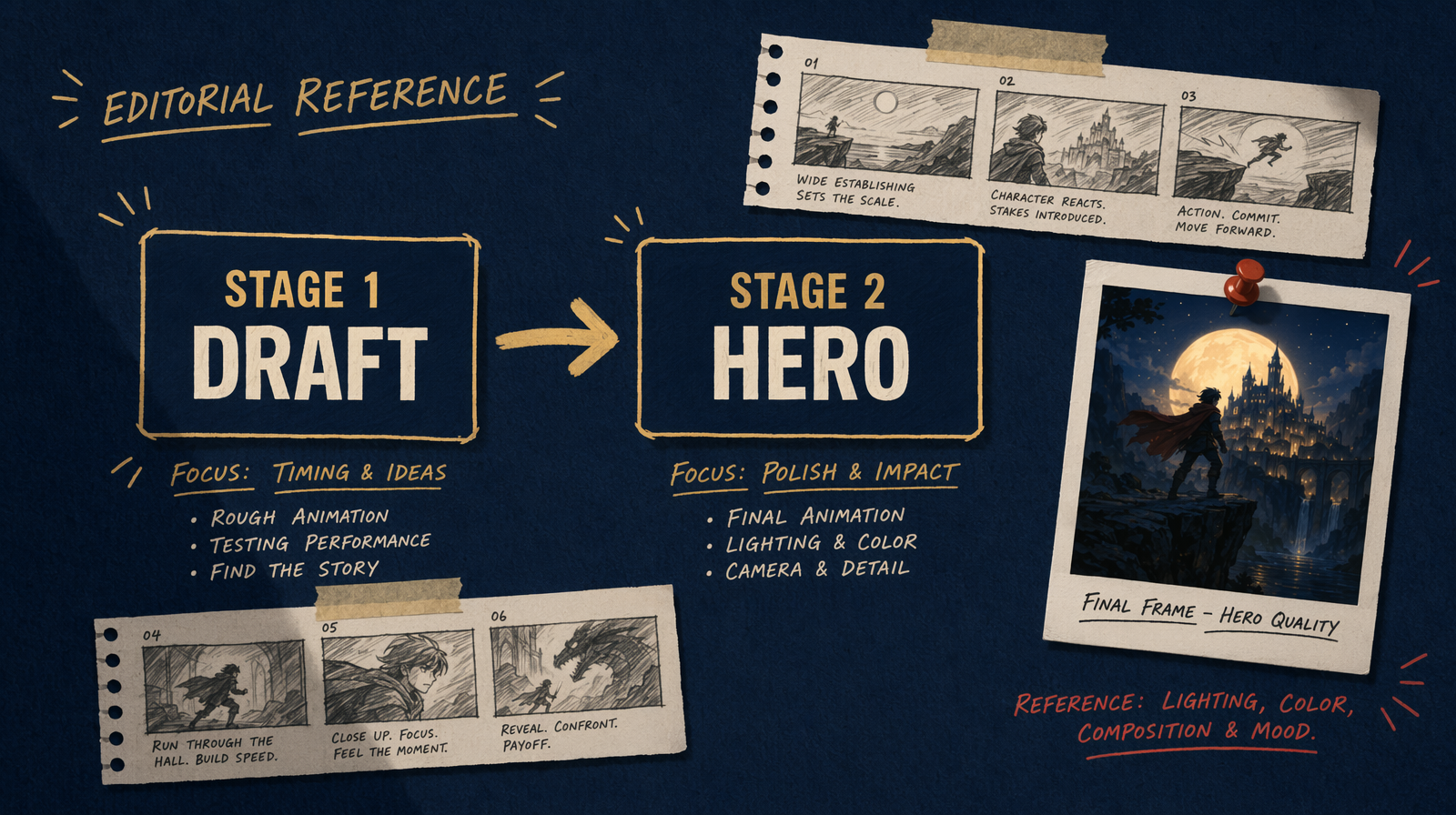
When you find a draft that is 80 percent right, stop iterating. Write down why it works in plain language. That note is what you feed into stage two, not the Fast render itself.
Stage two: hero render on the full model
Stage two runs the winning prompt through fal-ai/veo3.1/text-to-video at the same settings. Same aspect ratio, duration, audio flag. Same prompt, word for word. You are not reinventing the shot. You are upgrading fidelity.
1async function hero(prompt) {2 // or fal-ai/veo4/text-to-video once available3 return fal.subscribe("fal-ai/veo3.1/text-to-video", {4 input: {5 prompt,6 duration: "8s",7 resolution: "1080p",8 aspect_ratio: "9:16",9 generate_audio: true10 }11 });12}1314const final = await hero(winningPromptFromStageOne);
Plan on two to three hero rerolls, not ten. The prompt is proven on Fast, so most reroll reasons are stochastic (different face, gait, light quality). Pick the best, or keep all three as variants.
Budget math for a single hero ad
Assume a 9:16 8 second hero ad with audio.
- Stage one: 10 drafts on Veo 3.1 Fast at $0.25 = $2.50.
- Stage two: 3 hero renders at 8 * $0.40 = $3.20 each = $9.60.
- Total: $12.10 for one finished 8 second ad, audio included.
Compare to single stage. Ten full Veo renders to explore plus three to pick a winner is 13 * $3.20 = $41.60. Same output, more than three times the cost.
The two stage pattern is not always faster in wall time because you pay for two round trips. But it is dramatically cheaper per final deliverable, and it keeps expensive renders focused on decisions that benefit from fidelity.
When to promote to Veo 4
When Veo 4 ships, stage two becomes fal-ai/veo4/text-to-video. Stage one stays on 3.1 Fast because it is fit for purpose and cheap. Veo 4 is expected to sit in the same premium band, so the budget math above is a reasonable planning floor.
For a five shot campaign, a pattern that nails the first usually nails the rest with minor changes, so stage one on shots two through five runs shorter, often five drafts instead of ten. Call it $1.25 stage one plus $9.60 stage two per additional shot. Five shots total lands around $55.